

To ensure a seamless gaming experience, it’s crucial to gather all the necessary materials before diving into the game. Check out M303 to know more
For a typical game of Hand and Foot, you’ll need multiple decks of standard playing cards. Specifically, five to six decks, including jokers, are recommended. The number of decks can be adjusted based on the number of participants, with more decks generally making for a more dynamic and entertaining game. The inclusion of jokers adds an element of unpredictability, keeping players on their toes.
Hand and Foot is ideally played with four players, offering a balanced and competitive environment. However, the game is versatile enough to accommodate more or fewer participants. Adapting the rules for different numbers of players can introduce new challenges and strategies, ensuring that the game remains fresh and engaging every time you play.
Keeping track of scores is an essential aspect of Hand and Foot. Prepare a notepad and pen to jot down points as you progress through the game. This not only ensures fair play but also adds an element of strategy, as players must constantly assess their standing and adjust their tactics accordingly. A well-organized score sheet can be the difference between victory and defeat.
Setting Up the Game
A well-structured setup lays the foundation for an enjoyable game of Hand and Foot. Ensuring each player is prepared will lead to a smoother gameplay experience.
Shuffle the Decks
The first step in setting up the game is to thoroughly shuffle all the decks together. This guarantees a good mix of cards and prevents any predictable patterns from forming. A well-shuffled deck introduces an element of chance and excitement, which is a hallmark of Hand and Foot.
Deal the Hand
Each player receives 11 cards dealt face-down, forming their initial “hand.” The hand represents the cards you begin the game with and is your primary tool for creating melds. Properly managing your hand is crucial for building an effective strategy and setting the stage for a successful game.
Deal the Foot
In addition to the hand, each player is dealt another 11 cards face-down, known as the “foot.” These cards are set aside and will be used later in the game. The foot adds a layer of complexity to the game, requiring players to think ahead and plan for the transition from hand to foot.
Remaining Cards
The remaining cards are placed in the center of the table, forming the draw pile. Flip over the top card to start the discard pile. The draw and discard piles are central to gameplay, providing opportunities for strategic card acquisition and disposal.
Understanding the Card Values
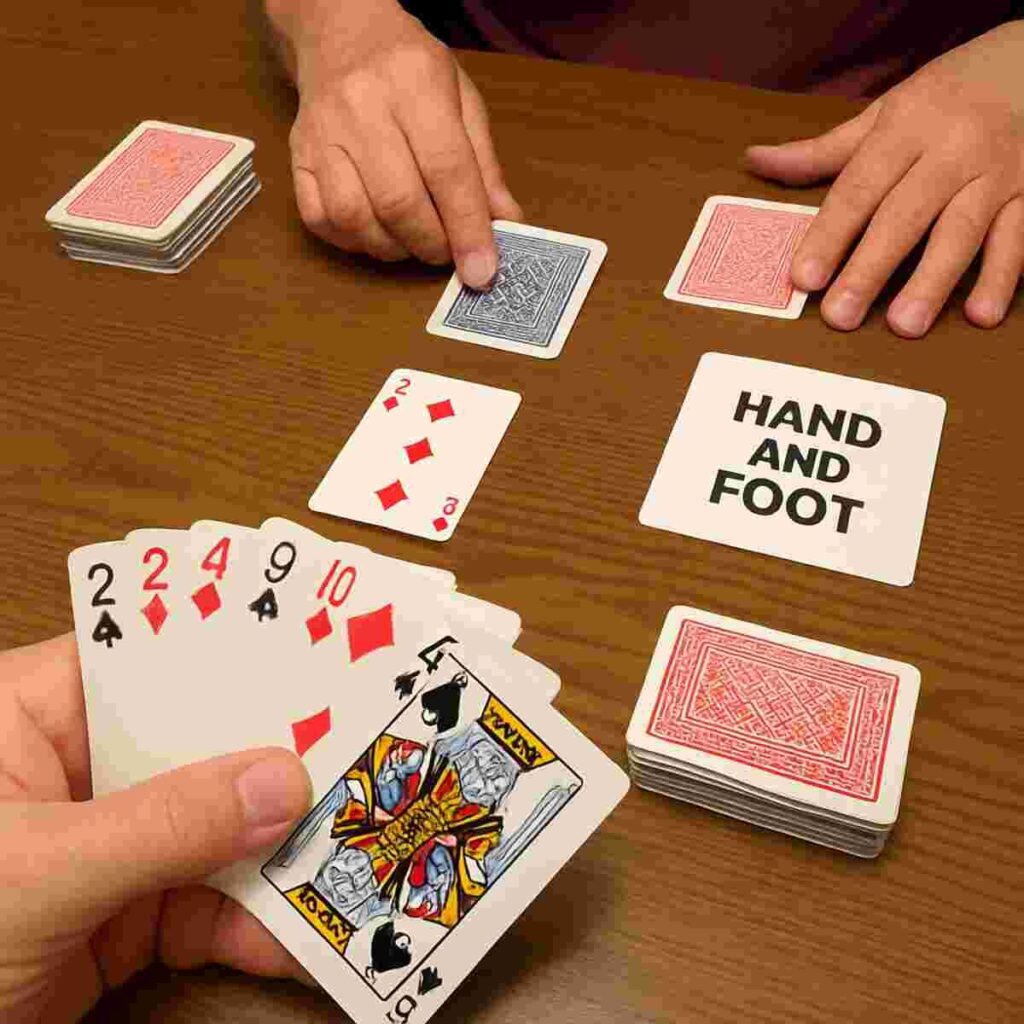
A firm grasp of card values is essential for successful gameplay. Each card holds a specific value that influences your strategy and scoring potential.
Jokers and Twos
Jokers are worth 50 points and serve as wild cards, offering flexibility in creating melds. Similarly, twos are worth 20 points and also function as wild cards. These cards are invaluable for completing melds and maximizing your score, but they must be used judiciously to avoid over-reliance.
Eights and Nines
Eights and nines are each worth 5 points. While they may not seem as valuable as other cards, they play a critical role in forming melds and can contribute significantly to your overall strategy. Balancing these cards with higher-value ones is key to maintaining a strong position in the game.
Tens to Kings and Aces
Cards from tens to kings are each worth 10 points, while aces are valued at 20 points. These higher-value cards can quickly boost your score when used effectively in melds. Prioritizing these cards in your strategy can lead to substantial gains, especially when forming clean books.
Black and Red Threes
Black threes are worth 5 points and cannot be used in melds, while red threes are worth a hefty 500 points but also cannot be melded. Red threes offer significant scoring opportunities and should be collected whenever possible to enhance your score dramatically.
The Objective of the Game
The primary goal in Hand and Foot is to create “melds” of seven cards of the same rank and to build as many “books” as possible. Understanding the nuances of melds and books is vital for mastering the game.
Starting the Game
Begin each turn by drawing two cards from the draw pile. This initial action sets the tone for your strategy and can greatly influence the direction of your game. Carefully consider your options and plan your moves to optimize your hand.
Create Melds
Utilize the cards in your hand to create melds, which consist of at least three cards of the same rank. Melds are the building blocks of your strategy, and creating strong melds is essential for accumulating points and progressing in the game.
Going Out
To “go out” or end a round, you must have completed at least one clean and one dirty book. Going out requires careful planning and execution, as it signifies the culmination of your strategic efforts and can lead to a significant score boost.
Playing the Foot
Once you’ve played all the cards in your hand, you can pick up your “foot” and continue playing. Transitioning from hand to foot is a pivotal moment in the game and requires strategic foresight to ensure a smooth and advantageous continuation.
Ending the Round
A round concludes when a player has played all their cards and completed the necessary books to go out. At this point, everyone tallies their points, and the next round begins. Ending a round successfully can provide a strategic advantage, as it allows you to set the pace for the following round.
Scoring the Game
Scoring in Hand and Foot involves a combination of completed books, unplayed cards, and bonuses. Mastering the scoring system is crucial for maximizing your potential and achieving victory.
Completed Books
Clean books score 500 points, while dirty books score 300 points. Prioritizing the completion of clean books can lead to substantial point gains and is a fundamental aspect of a winning strategy.
Unplayed Cards
Deduct the point value of any cards left in your hand or foot when the round ends. Minimizing unplayed cards is essential for maintaining a high score and avoiding unnecessary point deductions.
Red Threes and Bonuses
Add 500 points for each red three you have collected. Additionally, earn a bonus for being the first to go out. These scoring elements can significantly impact the final outcome of the game and should be actively pursued.
Winning the Game
Hand and Foot is typically played over several rounds, with the game continuing until a player or team reaches a pre-agreed score, often set at 5,000 points. However, you can adjust this threshold based on your preferences and available time.
Setting the Winning Score
Determining the winning score is a crucial decision that influences the length and intensity of the game. A higher score extends the game, providing more opportunities for strategic play, while a lower score can lead to a quicker, more fast-paced experience.
Strategic Play
Engaging in strategic play involves balancing immediate gains with long-term objectives. Successful players are adept at adapting their strategies based on the evolving state of the game and the actions of their opponents.
Team Dynamics
When playing with teams, effective communication and coordination can be the key to victory. Understanding each player’s strengths and weaknesses and strategizing accordingly can give your team a competitive edge.
Tips and Strategies
Developing effective strategies is essential for mastering Hand and Foot. Here are some tips to enhance your gameplay.
Balance Your Melds
Aim for a good mix of clean and dirty books. Relying too much on wild cards can limit your scoring potential, so strive for a balanced approach that maximizes your points.
Plan Your Foot
Anticipate what’s left in your foot and make strategic decisions about when to go out. Effective planning ensures a smooth transition from hand to foot and can provide a significant advantage.
Watch Your Opponents
Keep an eye on the cards your opponents are picking up and discarding. This can provide valuable insights into their strategies and allow you to adjust your tactics accordingly.
Final Thoughts
Hand and Foot is a delightful game that blends strategy, luck, and a bit of friendly competition. It’s perfect for card enthusiasts looking for a game that’s easy to learn but offers deep strategic elements. So grab your decks, gather your friends, and enjoy an evening of fun with Hand and Foot!
Enjoy the Game
Whether you’re playing casually or competitively, the ultimate goal is to have fun and enjoy the company of those around you. Remember that the social aspect is just as important as the gameplay itself, fostering connections and shared experiences.
Continuous Improvement
As you play, continue to refine your strategies and develop new techniques. Each game offers an opportunity to learn and grow, enhancing your skills and deepening your understanding of Hand and Foot.
Embrace the Challenge
Embrace the challenges and unpredictability that Hand and Foot presents. With practice and perseverance, you’ll become a formidable player, capable of navigating the complexities of the game with ease and confidence. Happy playing!
