


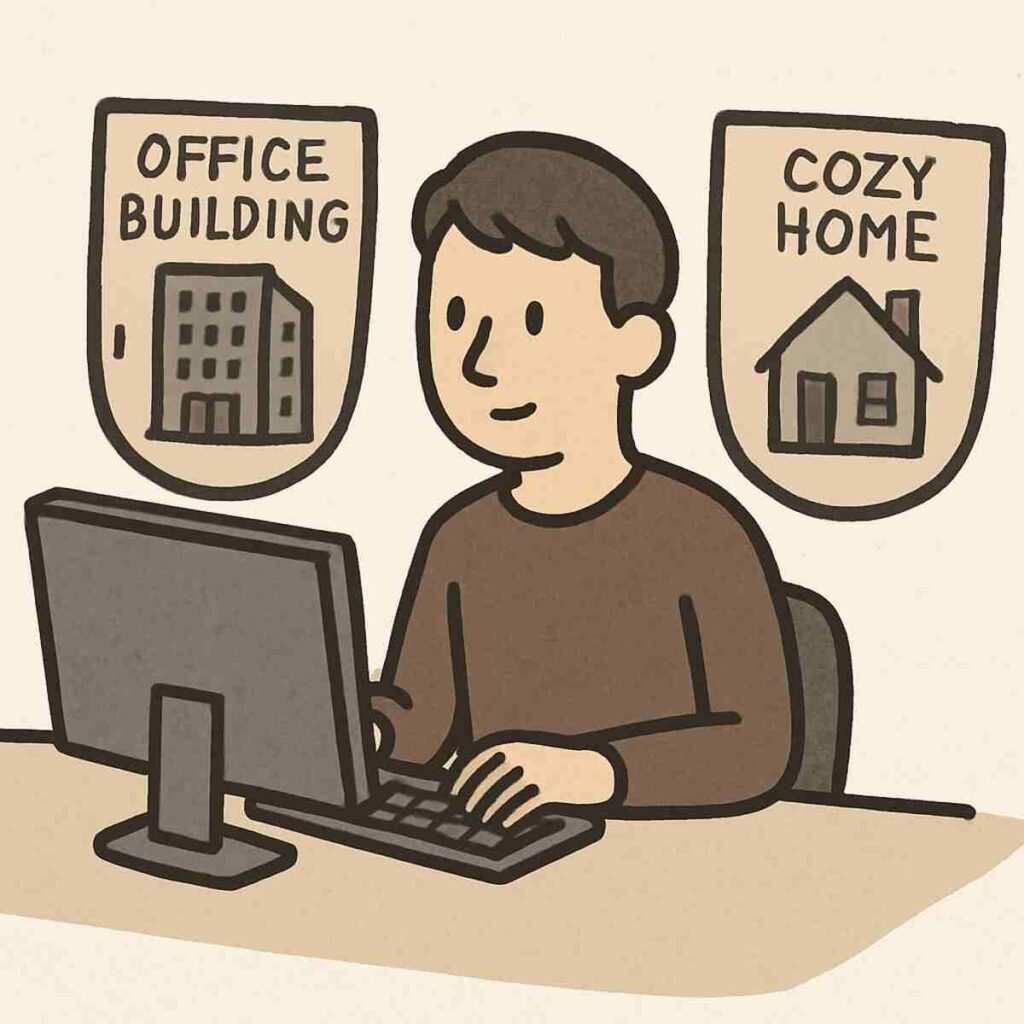
Image Suggestion: A split-screen illustration showing a computer user holding two masks. The left mask is labeled “Office Building” and looks rigid and industrial. The right mask is labeled “Cozy Home” and looks friendly and casual. Choose the best proxies for google ads.
Have you ever clicked a link to buy concert tickets or check a competitor’s price, only to face a stubborn “Access Denied” screen? It often feels personal, but in reality, the website is simply checking your ID. Every device connects to the internet with an IP address—a unique digital number that tells sites who you are and where you are located.
To get past these digital bouncers, you need a proxy. Think of a proxy as a helpful middleman. Instead of walking up to the website yourself, you send your request to the proxy, it asks the website for the information, and then hands the data back to you. The website never sees your real location; it only sees the middleman.
However, web automation security best practices suggest that simply hiding isn’t enough; the quality of your disguise matters. You are essentially wearing a digital mask, but not all masks are created equal. One type looks like a corporate ID badge from a massive server farm, while the other looks like a neighbor browsing from their living room sofa.
Making the wrong choice is often why users face constant CAPTCHAS or get blocked entirely. Understanding the trade-offs of datacenter proxies vs residential connections allows you to avoid IP bans when scraping or browsing. Digital masks are not created equal, and choosing the right one determines if you get through the door.
The Datacenter Proxy: Why This ‘Office Building’ Connection Is Fast But Easy to Catch
Imagine standing in front of a massive corporate skyscraper in a business district. Thousands of people work inside, moving efficiently and getting things done, but no one actually lives there. This is the perfect analogy for datacenter proxies. When you use this type of connection, your internet traffic isn’t routed through a residential house, but through a high-powered facility known as a server farm. These are large warehouses filled with computer servers, often owned by cloud giants like Amazon (AWS) or Google Cloud.
These digital addresses are artificial. Unlike a standard internet connection assigned to a home by a provider like AT&T or Comcast, datacenter IPs are generated in bulk by machines. Because they reside in professional facilities with massive bandwidth, high-speed datacenter proxy performance is unmatched. If your goal is to download huge files or check simple data on a site that doesn’t have strict security, these proxies act like a firehose—delivering information incredibly fast at a very low cost.
Websites, however, are suspicious of this efficiency. Security systems know that real humans don’t browse the web from cloud server farms. To a vigilant website like Nike or Ticketmaster, a connection coming from a datacenter looks like a “bot” wearing a neon sign. Furthermore, many providers offer the limitations of shared proxy server pools, meaning you might be sharing an IP address with other users. If one of your “neighbors” behaves badly and gets banned, the website blocks the entire address, locking you out too.
Consider why you might choose—or avoid—this “Office Building” connection:
- Pros:
- Speed: Much faster than residential connections.
- Price: The most affordable option on the market.
- Availability: You can purchase thousands of IPs instantly.
- Cons:
- Detectability: Highly likely to get blocked by sophisticated websites.
- Shared Risk: In cheaper pools, other users’ actions can get your IP banned.
If your task requires you to blend in with regular shoppers rather than speed through data, you need a connection that looks less like a corporate tower and more like a quiet suburban house.
The Residential Proxy: Why Looking Like a ‘Real Home’ Unlocks the Web
Stepping away from the glaring lights of server farms, residential proxies operate in the digital equivalent of the quiet suburbs. These connections route your internet traffic through devices located in actual homes, using the same type of setup you likely have in your living room right now. Instead of originating from a faceless warehouse, your request to a website appears to come from a laptop, tablet, or router in a residential neighborhood.
Every time a homeowner signs a contract with an Internet Service Provider (ISP)—companies like Comcast, AT&T, or Vodafone—they are assigned a specific IP address that tells the world, “I am a real person paying a utility bill.” When you use a residential proxy, you are essentially borrowing that digital reputation. To the outside world, you aren’t an anonymous user hiding behind a shield; you are simply a standard internet user browsing from home.
![A simple graphic of a house with a laptop inside connected to the internet, labeled ‘Residential IP – Trusted by Websites’.]
Major websites like Nike, Instagram, or airline booking platforms view these connections as highly trustworthy. Because the traffic looks identical to a grandmother checking her email or a student doing homework, security systems usually let it pass without challenge. This ability to blend into the crowd is your best tool for bypassing anti-bot detection systems that immediately flag and block the artificial, robotic-looking traffic coming from commercial data centers.
Reliability is the main selling point here, which often justifies the higher price tag compared to datacenter options. While a cheap server proxy might get blocked four out of ten times when trying to buy limited-edition items or scrape data, a high-quality residential connection typically succeeds over 90% of the time. This happens because banning a residential IP risks blocking a real, paying customer—a mistake most online businesses are terrified to make.
Beyond just appearing human, these proxies allow you to virtually travel anywhere in the world to access content restricted by location. By routing your connection through a home in London or Tokyo, you can bypass “geo-blocking” to see local advertisements or secure cheaper regional pricing on flights. Furthermore, one of the key benefits of rotating residential IPs is that you can automatically switch from one house to another every few minutes, ensuring that you never overstay your welcome on a website or trigger security alarms by making too many requests from a single spot.
You might wonder exactly how a website tells the difference between an AT&T home connection and an Amazon cloud server in milliseconds. It turns out that every IP address carries a hidden “background check” score based on who specifically owns the infrastructure, a critical concept known as the ASN.
Why Websites Trust Some IPs More Than Others: The Secret of Trust Scores and ASNs
Whenever you click a link, the website quietly runs a background check on your connection before showing you any content. It looks specifically at your Autonomous System Number (ASN), which functions like the issuing authority on a passport. If your digital passport was issued by a consumer internet provider like Verizon or Comcast, the website assumes you are a real person. However, if the ASN belongs to a cloud hosting company like Amazon AWS or Microsoft Azure, the website immediately suspects you might be a bot or a proxy user.
This quick check results in what security companies call an IP reputation or trust score. Think of this score like a digital credit rating that determines how much freedom you have on a site. A high trust score—typically gained from using a residential connection—means you can browse freely without interruptions. A low score forces the website to put up defenses, which is why you might suddenly face a CAPTCHA puzzle asking you to click on traffic lights just to view a product page.
Several red flags can instantly ruin your reputation score and trigger these annoying blocks. Websites rely on massive databases to identify and penalize connections that look suspicious. Common triggers that drop your trust score to zero include:
- Originating from a known server farm or datacenter ASN.
- Using an IP address that was previously caught spamming or attacking other sites (appearing on a “blacklist”).
- Sending requests faster than a human could click.
Understanding IP reputation creates a crucial decision point for your budget. While a residential proxy with a pristine ASN offers the highest success rate, it is also significantly more expensive than a datacenter option. Not every task requires a perfect credit score or a premium disguise; identifying when to pay for that high-trust reputation and when a cheaper, standard connection is the smarter choice is key to optimizing your operations.
Sneaker Drops vs. Simple Prices: Picking the Winner for Your Specific Use Case
Paying top dollar for a premium residential connection when you just want to read public data is like renting a tuxedo to go to the gym—it’s overkill and a waste of money. Conversely, wearing gym clothes to a black-tie event will get you kicked out immediately. Success in choosing the right proxy for your use case comes down to understanding how defensive the specific website is and how much budget you are willing to spend to bypass those defenses.
Datacenter proxies are the “economy class” of the proxy world: they get you there fast and cheaply, but they don’t offer any perks or privacy protections. Because these IPs are clearly registered to cloud companies, they are perfect for high-volume tasks on sites with low security. If you are just gathering general statistics or testing how your own website loads from a different country, these fast connections are your best Return on Investment (ROI).
However, high-stakes environments require the premium “disguise” of a Residential proxy. When you are overcoming geo-blocking on global websites like Netflix or trying to manage social media accounts, the website is actively looking for reasons to ban you. In these scenarios, the higher cost of a residential IP is necessary insurance. If you use a cheap datacenter proxy here, you risk having your valuable accounts suspended because you look like a bot farm rather than a human user.
Compare the winners for common digital tasks:
- Sneaker Drops & Ticket Sales: Residential. These sites have the strictest security; a datacenter IP will be blocked instantly.
- Basic Price Comparison: Datacenter. Most retail sites allow you to view prices without strict checks, saving you money on data costs.
- Travel Booking (Flights/Hotels): Residential. Travel sites often show different prices to real consumers vs. commercial scrapers.
- Social Media Management: Residential. Platforms like Instagram and LinkedIn will flag or ban accounts accessed from commercial server farms.
![Image: A ‘Comparison Winner’ table showing icons for Sneakers, Flights, and Data, with checkmarks for either DC or Residential.]
Following these web automation security best practices ensures you don’t burn your budget on premium features you don’t need, while still protecting your access where it counts. But for businesses running complex operations, you usually don’t have to choose just one. Combining these tools allows you to save money without sacrificing reliability.
Saving Your Budget: How to Mix Datacenter and Residential Proxies Without Getting Banned
Running a business means watching the bottom line, and exclusively using premium residential proxies for every single task is often unnecessary. A smart approach involves designing “cost-effective web scraping solutions” where you start with the cheaper datacenter option for easy tasks, like browsing a public home page. You only switch to the expensive residential connection when you encounter a strict “members only” area or a checkout page that specifically demands a high-trust identity. This method ensures you aren’t paying premium prices for low-value traffic.
This technique relies on a digital safety net known as “failover logic.” Imagine trying to enter a club; if the bouncer rejects your first ID (the datacenter proxy), you don’t simply give up and leave. Instead, your system automatically presents a second, much more convincing ID (the residential proxy) to gain access instantly. By only using the premium ID when the cheap one actually fails, you maintain high success rates without burning through your budget on unnecessary safeguards.
Scaling data collection with automated rotation allows you to balance these costs across thousands of requests efficiently. However, having the right mix of datacenter and residential sources is only half the battle; you also need to decide how long to keep wearing the same mask. Some tasks require holding the same digital identity for twenty minutes to fill out a long form, while others require a completely new face for every single click to stay hidden.
Rotating vs. Static IPs: Choosing the Best Way to Shuffle Your Digital Identity
Once you have your source, you must decide how often to change your disguise. A “Static” (or Sticky) IP acts like a permanent ID badge, allowing you to stay logged into an account for hours without raising alarms. In contrast, the difference between static and rotating IPs is that rotating proxies switch your digital identity with every single click, preventing websites from blocking you for asking too many questions at once.
Your choice depends entirely on whether you need to build a reputation or remain invisible:
- Static IPs: Essential for managing social media profiles or completing lengthy checkout processes.
- Rotating IPs: The best defense against “rate limiting” (bans caused by speed) when comparing hundreds of prices.
For users who need the stability of a static line but the trust of a home connection, comparing ISP proxies vs mobile residential options reveals a smart middle ground. ISP proxies provide the high speed of an office connection with the clean reputation of a home user. With your strategy defined, you are ready to move from planning to execution.
From Purchase to Performance: A Simple 4-Step Plan to Set Up Your First Proxy
You now have the insight to choose the right digital mask for your specific needs. If you prioritize raw speed and low costs, the Datacenter proxy is your efficient workhorse. However, for tasks requiring high trust—like securing limited-edition items or managing social profiles—the Residential proxy remains the clear winner for stealth.
Ready to browse anonymously? Use this step-by-step proxy configuration to get started:
- Select Your Type: Purchase a small Datacenter “starter pack” for testing or a Residential plan for strict websites.
- Get Credentials: Copy the IP address, port, username, and password from your provider’s dashboard.
- Configure: Enter these details into your browser’s network settings or a simple proxy extension.
- Verify: Visit a “What Is My IP” website to confirm your digital location has successfully changed.
There is no need to overspend on expensive subscriptions immediately. Start with a basic package to see how much smoother your browsing becomes. By simply matching the right tool to the job, you adopt web automation security best practices that protect your identity. You can finally trade those frustrating “Access Denied” screens for the data and access you need.